1. Core Requirements for Environmental Testing of New Energy Vehicle Battery Packs
1.1 Correlation Between Temperature Stress and Battery Operational Safety
As the core component of new energy vehicles, power battery cells, modules and complete battery packs are constantly exposed to ambient temperature fluctuations and heat generated during charging and discharging in daily operation. Repeated high and low temperature cycles cause thermal expansion and contraction of materials as well as changes in internal stress. Long-term exposure will lead to performance degradation and potential structural risks.
Rapid temperature change chambers and thermal cycle chambers simulate full-lifecycle temperature conditions of vehicles in advance, so as to fully identify potential defects of batteries. This fundamentally improves product safety and service life. As industrial standards become increasingly stringent, higher requirements are set for the temperature change rate, load capacity and chamber size of testing equipment.
1.2 Specifications for Thermal Cycling Tests per Automotive Standards
Current testing of power batteries strictly complies with automotive-grade standards, which define clear specifications for temperature range, temperature ramp rate, cycle times and combined temperature & humidity control. Conventional tests require thousands of high-low temperature cycles. Some reliability verifications also adopt combined stress tests with humidity and vibration.
The Yangtze River Delta region including Shanghai, China is home to numerous new energy vehicle manufacturers and supporting battery enterprises, with strong demands for production line testing, R&D certification and batch screening. Local customers require not only high-performance testing equipment, but also efficient and professional technical support and maintenance services.
2. Core Technologies of Lab Companion Dedicated Rapid Temperature Change Chambers for Battery Packs
2.1 Large-capacity Integrated Chamber for Full-range Battery Testing
To adapt to the large size and diverse specifications of battery packs, the equipment adopts a large-capacity integrated chamber with optimized internal layout. It is suitable for testing cells, modules and complete battery packs of different dimensions.
Reinforced thermal insulation and sealing structures effectively reduce heat exchange between inside and outside the chamber. A stable internal temperature field is maintained during prolonged high-low temperature cycling, perfectly meeting the requirements for large-scale battery pack testing.
2.2 High-speed Temperature Change & Adaptive Load Technology
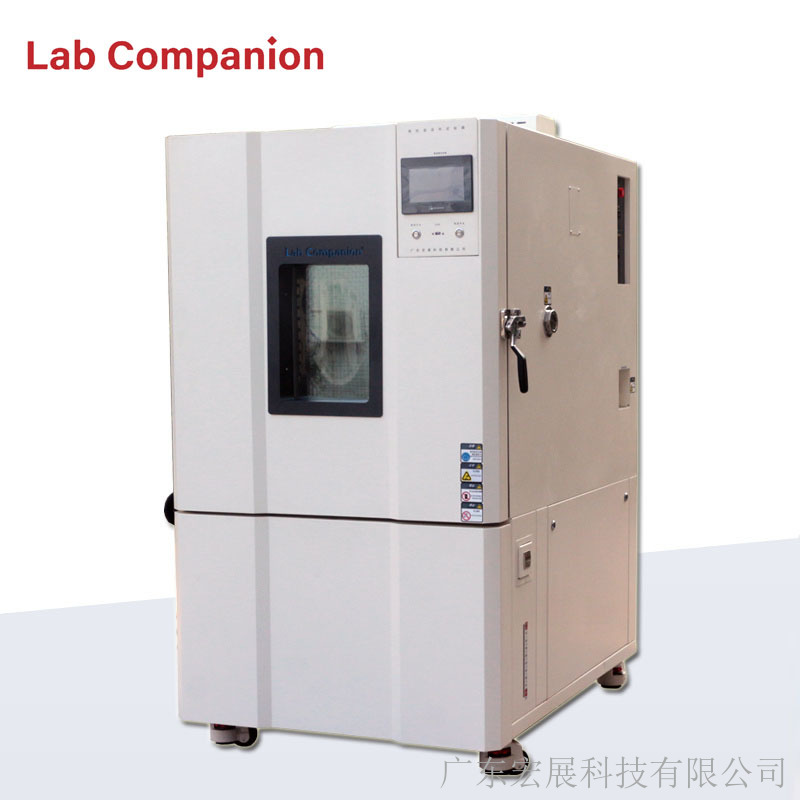
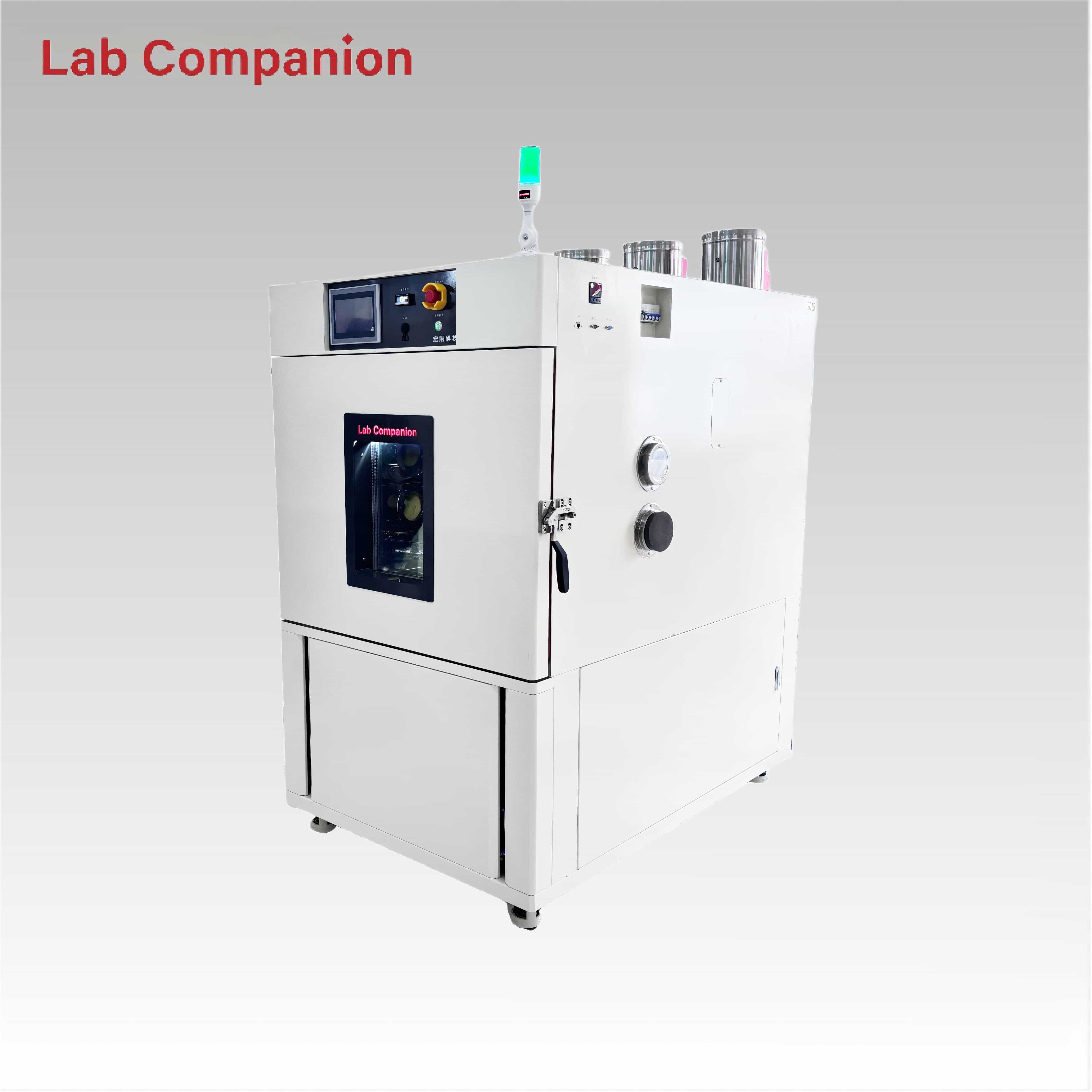
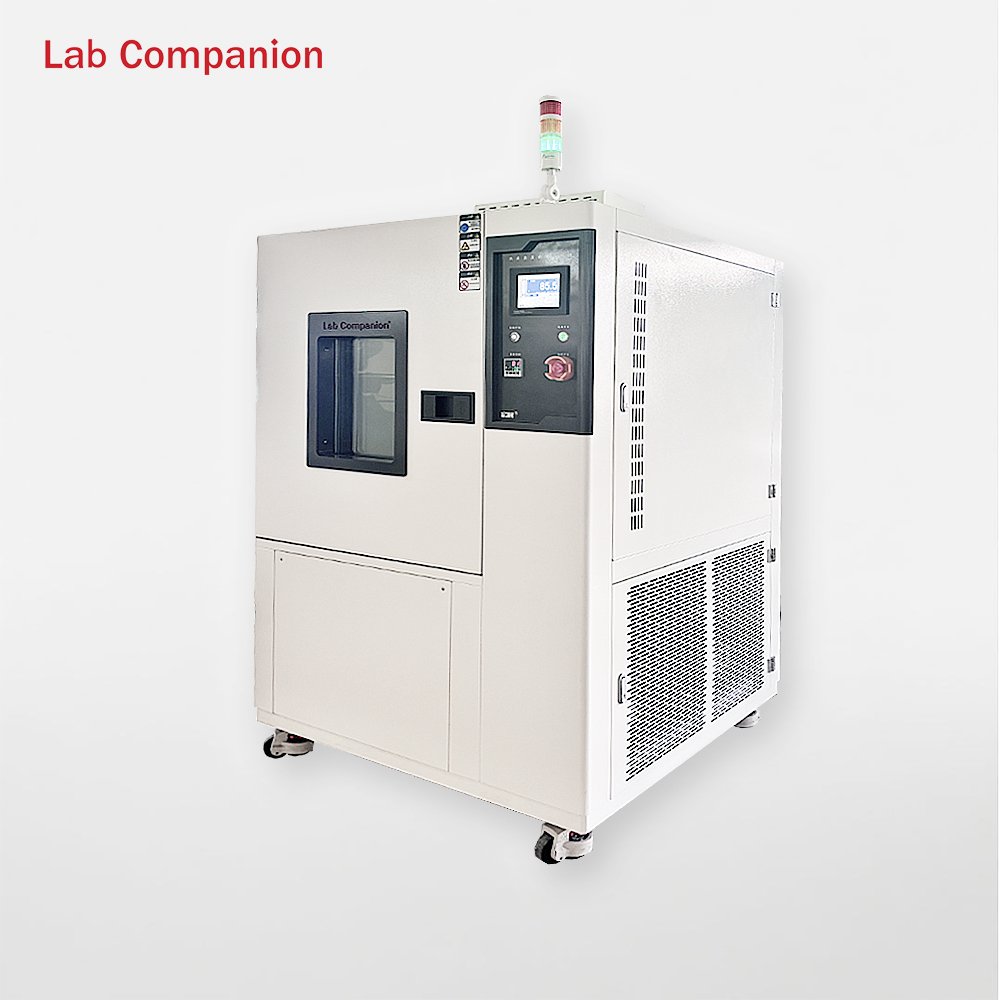
The equipment delivers a maximum temperature change rate of 25°C/min. Equipped with an adaptive load system, it offsets heat generated by batteries during charging and discharging in real time, ensuring stable and consistent temperature ramp rates even when test samples continuously produce heat.
The full product line covers a temperature range of -70°C ~ 180°C, fully satisfying all working condition tests for power batteries.
2.3 Integrated Temperature, Humidity & Vibration Testing
To meet the demand for combined environmental tests, the equipment supports synchronous control of temperature, humidity and vibration. It accurately simulates real driving scenarios such as outdoor exposure and driving on bumpy roads.
While achieving rapid temperature change, the chamber precisely regulates internal humidity. The anti-condensation design prevents damage to battery electrical components caused by low temperature and high humidity.
2.4 Dedicated Safety Alarm & Protection System
The equipment is equipped with multi-level early warning mechanisms for abnormal temperature and overpressure, with customized safety optimizations for battery testing scenarios. Once abnormal parameters are detected, the system triggers alarms and activates protective actions immediately to ensure safe and stable testing throughout the process.
3. Comprehensive Testing Solutions for Power Batteries at All Levels
3.1 Early Defect Screening for Battery Cells
At the front end of production, rapid temperature change chambers conduct thermal cycle tests on individual cells. High-frequency temperature cycling eliminates early failure products, controls the quality of raw materials and reduces failure risks of finished modules and packs. The compact and efficient equipment is ideal for high-volume batch screening on production lines.
3.2 Working Condition Verification for Battery Modules
After assembly of battery modules, rapid thermal cycle chambers simulate temperature fluctuations accompanied by charging and discharging. They verify the stability of internal connections and heat dissipation systems.
The programmable controller supports complex cycle logic to replicate actual operating conditions of modules and complete long-term reliability validation.
3.3 Certification Testing for Complete Battery Packs
For vehicle certification of battery packs, large-chamber rapid temperature & humidity change chambers perform extreme high/low temperature tests and alternating temperature-humidity tests. All technical parameters are in line with automotive certification standards. Reliable test data helps customers complete certification procedures efficiently.
3.4 Environmental Stress Screening for Mass Production
In the mass production phase, ESS (Environmental Stress Screening) chambers operate continuously to conduct stress screening on finished battery packs. Latent defects are fully exposed to ensure consistent quality of delivered products.
4. Global Service & Practical Applications in China
4.1 Professional Technical Team for New Energy Industry
Based in Shanghai, China, Lab Companion has established a professional technical team specializing in new energy battery testing standards and working conditions. We provide targeted support to vehicle manufacturers and battery suppliers across the local industrial cluster.
4.2 Customized Testing Solutions & Online Technical Training
Our technical team customizes equipment parameters and testing programs remotely according to customers’ product specifications and international testing standards.
We also provide comprehensive online training covering equipment operation, daily maintenance and safety regulations. With video guidance, remote assistance and detailed documents, operators can master equipment operation efficiently.
4.3 Successful Local Application Cases in China
Our battery testing equipment has been widely adopted by many leading new energy enterprises in Shanghai and surrounding areas of China. The equipment runs stably during thousands of thermal cycles, effectively shortening R&D cycles and improving overall reliability of battery products.
4.4 Global Online After-sales Support System
We provide 24/7 global online after-sales service without on-site maintenance. Our professional team offers multilingual technical consultation, remote troubleshooting, equipment debugging and operational guidance. Rapid remote response minimizes equipment downtime and guarantees uninterrupted R&D and production testing for global customers.
20℃/min ultra-fast temperature change + 72-hour continuous stable operation, with robust performance to guarantee urgent delivery, helping enterprises seize rush orders and retain core customers!
For small and medium-sized enterprises in industries such as electronic components, auto parts, and new energy batteries, urgent rush orders have long been the norm. Downstream automakers and core clients often place sudden orders, requiring temperature change testing and qualified reports to be completed within 24 hours — any delay will result in immediate cancellation of cooperation. However, traditional rapid temperature change chambers suffer from low efficiency and high failure rates, taking more than 12 hours to finish a single test run, and are prone to malfunctions that interrupt testing. This not only delays delivery schedules but also causes enterprises to lose orders and suffer heavy financial losses for no reason.
With 21 years of deep cultivation in the environmental testing equipment industry, Lab Companion fully understands the pain points of emergency testing for small and medium-sized enterprises worldwide. We have developed a dedicated emergency rapid temperature change chamber targeting these demands, relying on core advantages of ultra-high-speed temperature change and high operational stability. It can complete multiple sets of emergency temperature change tests within 24 hours, completely breaking the constraints of traditional equipment, enabling enterprises to handle rush orders calmly and firmly retain customer resources and market share.
Industry Emergency Pain Points: Traditional Equipment Fails Frequently, Making Rush Orders Hard to Fulfill
In-depth industry research shows that small and medium-sized enterprises generally face three core dilemmas when dealing with rush order testing, falling into a passive position throughout the process:
• Low Testing Efficiency, Unable to Meet Batch Demands: Traditional rapid temperature change chambers only achieve a load temperature change rate of 5-8℃/min, taking at least 12 hours to complete one -40℃~85℃ cycle test. Only one test run can be finished within 24 hours, making it completely inadequate for batch urgent testing needs and unable to meet customer delivery deadlines.
• Poor Equipment Stability, Prone to Testing Interruptions: Most traditional equipment uses low-quality core components, with an extremely high failure rate during continuous operation. Once it shuts down for maintenance mid-test, it often takes hours of downtime, directly missing the delivery window and wasting all previous testing efforts.
• Lack of Emergency Support, Exacerbating Delays: After equipment failures, manufacturers respond slowly with no dedicated services such as urgent debugging or expedited report generation, further prolonging the testing cycle and causing enterprises to miss cooperation opportunities.
An auto parts manufacturer once encountered such a predicament: it received an urgent order from an automaker, requiring 3 sets of vehicle sensor temperature change tests to be completed within 24 hours. When using traditional equipment, a refrigeration malfunction occurred after only 10 hours of operation, taking 6 hours to repair. Ultimately, the manufacturer failed to submit the test report on time, losing the long-term cooperative automaker client and incurring incalculable economic losses. Such cases are common in the industry, and the ability to handle emergency testing for rush orders has long become a core competitiveness for small and medium-sized enterprises to seize the market and gain a foothold.
Lab Companion Robust Emergency Solution: Speed + Stability + Remote Support, Complete Urgent Testing in 24 Hours
Targeting the pain points of industry emergency testing, Lab Companion launches a dedicated emergency rapid temperature change chamber, paired with a full-process remote emergency service system, realizing "faster testing, stable operation, and on-time delivery" to comprehensively help enterprises overcome rush order testing challenges and cope with market urgent demands calmly.
01 20℃/min Ultra-Fast Temperature Change, Doubling Testing Efficiency
Lab Companion's dedicated emergency model boasts a load temperature change rate of up to 20℃/min, 2-4 times more efficient than traditional equipment. It only takes 8 hours to complete one -40℃~85℃ cycle test, and 3 sets of urgent tests can be easily finished within 24 hours, perfectly adapting to the batch testing needs of rush orders. Equipped with a binary cascade high-efficiency refrigeration system and high-power heating module, it accelerates both heating and cooling: it only takes 3.2 hours to drop from 25℃ room temperature to -40℃, and 5.5 hours to surge from -40℃ to 85℃, greatly shortening the testing cycle and seizing delivery opportunities.
02 72-Hour Fault-Free Stable Operation, Eliminating Testing Interruption Risks
The equipment selects world-class core components, including French Tecumseh hermetic compressors and US Copeland refrigeration parts, combined with a modular precision structure design. It supports 72-hour continuous fault-free operation with a complete machine failure rate lower than 0.5%, completely avoiding the risk of mid-test shutdowns during emergency testing and ensuring smooth testing progress. It is also equipped with an intelligent fault early warning system that monitors the operation status of core components in real time, detects potential faults in advance, minimizes downtime, and keeps testing on track.
03 Full-Process Remote Emergency Service, Fully Guaranteeing On-Time Delivery
Lab Companion has a global service network and a professional technical support team, launching exclusive remote emergency services for rush orders: 2-hour rapid response, full-time online remote guidance and technical troubleshooting. If equipment faults occur, our professional engineers provide real-time remote debugging and maintenance guidance to resolve issues quickly and ensure uninterrupted testing. We also offer expedited test report services: standardized accurate reports can be generated within 1 hour after testing completion, helping enterprises submit for customer review quickly and fulfill orders smoothly.
Real Case Verification: Complete 3 Sets of Tests in 24 Hours, Successfully Retain Key Client Orders
An electronic components manufacturer received an urgent rush order from a leading smartphone brand, requiring 3 sets of -40℃~85℃ cycle temperature change tests for mobile phone camera modules to be completed within 24 hours with a qualified report submitted; otherwise, the order would be canceled directly. The manufacturer's traditional equipment could only complete 1 set of tests within 24 hours, leaving it helpless against the strict deadline. It immediately contacted Lab Companion to activate the dedicated emergency solution.
Lab Companion promptly arranged the T-200-20 rapid temperature change chamber, with our engineers providing remote debugging and pre-setting testing procedures. The equipment started testing at a 20℃/min ultra-fast temperature change rate, operating stably throughout without any malfunctions. Actual test data shows that each test run took only 7.5 hours, and 3 sets of tests were successfully completed within 24 hours. With a temperature control accuracy of ±0.1℃ and temperature field uniformity ≤±2℃, the test data was accurate and reliable. A standardized report was generated within 1 hour, allowing the manufacturer to pass customer review smoothly and successfully retain the large order and core cooperative relationship.
The person in charge of the enterprise stated: "The ultra-fast efficiency and high stability of Lab Companion's rapid temperature change chamber have completely solved our rush order testing problems. We later designated it as our exclusive emergency testing equipment, and to date, we have completed more than 20 rush order tests with Lab Companion's equipment, with zero delivery delays, helping us firmly stabilize our customer base."
Exclusive Emergency Support: Reserved Emergency Equipment, No Waiting for Rush Orders
To help small and medium-sized enterprises worldwide handle rush orders more calmly, Lab Companion reserves dedicated emergency testing equipment. Enterprises can make reservations in advance to secure exclusive equipment resources, and start testing immediately when rush orders arrive without waiting for equipment allocation. We also providefree remote debugging services for emergency testing: engineers connect with testing demands one-on-one remotely, pre-set testing procedures to enable quick test startup. For ultra-urgent needs, we offer priority remote technical support to further shorten testing preparation time, allowing enterprises to seize orders faster.
Lab Companion's dedicated emergency rapid temperature change chamber, paired with a comprehensive global remote emergency service system, completely resolves the rush order testing dilemmas of small and medium-sized enterprises. It frees enterprises from passive delays, helping them easily seize urgent orders, stabilize core customers, and comprehensively enhance core market competitiveness!
In environmental simulation testing, Rapid Temperature Change Chambers and Thermal Shock Chambers are both critical for verifying product reliability under temperature stress. However, many customers choose the wrong equipment due to unclear working principles and application scenarios:
• Simulating natural gradual temperature changes with a thermal shock chamber → test results do not reflect real working conditions.
• Testing resistance to instantaneous temperature shock with a rapid temperature change chamber → fails to meet test requirements.
Wrong selection wastes investment, delays R&D, and weakens market competitiveness.
Based on more than 20 years of industry experience, LabCompanion® explains the core differences between these two chambers to help you select the right equipment for your application.
I. Core Principle Differences
1. Rapid Temperature Change Chamber
Single-chamber design · Continuous & gradual temperature change
• The entire test is performed in one single test space.
• Heating and cooling systems work together to provide smooth, continuous, adjustable temperature ramping.
• Temperature change rate: 5–20°C/min (higher rates available upon request).
• LabCompanion® advantage: Binary cascade refrigeration, high-efficiency heating, and dual PID + AI intelligent control for stable, precise ramping without sudden fluctuations.
• Simulates real-world natural temperature cycles.
2. Thermal Shock Chamber
Multi-chamber design · Instant temperature switching
• Typically 3 independent zones (hot chamber, cold chamber, test area); 2-zone models also available.
• Test samples are rapidly transferred between hot and cold environments with no gradual ramping.
• Temperature shock speed: > 5°C/s (up to 10°C/s for high-performance models).
• LabCompanion® advantage: Independent heating & cooling systems, fast-acting valves, and airflow guidance for extreme temperature shock.
• Temperature range:
○ Hot zone: +60°C to +200°C
○ Cold zone: -70°C to 0°C (down to -196°C with liquid nitrogen)
II. Key Parameters & Temperature Characteristics
Rapid Temperature Change Chamber
• Focus parameters: Ramp rate, temperature accuracy ±0.1–±0.5°C, uniformity ≤ ±2°C
• Standard range: -70°C to 180°C (customizable to -220°C)
• Temperature behavior: Continuous, smooth, gradual
• Strength: High precision, uniform temperature field
Thermal Shock Chamber
• Focus parameters: Shock temperature range-196°C to +200°C, shock speed, recovery time
• Temperature behavior: Instant, extreme, non‑gradual change
• Strength: Ultra-fast shock, high stability for harsh testing
III. Application & Selection Guide
Choose Rapid Temperature Change Chamber if:
• You need to simulate natural daily/seasonal temperature cycles.
• You want to evaluate long-term reliability under repeated gradual temperature changes.
• Industries:
○ Automotive electronics & components
○ Consumer electronics
○ Semiconductors & PCBs
○ General electronic reliability testing
Choose Thermal Shock Chamber if:
• You need to simulate extreme, instantaneous temperature swings.
• You want to expose material weaknesses, cracks, or failures quickly.
• Industries:
○ Aerospace
○ Military & defense
○ High-performance alloys
○ Semiconductor packaging
○ Components used in extreme environments
IV. LabCompanion® Solutions & Services
1. Dual-Mode Customization
For customers needing both temperature cycling AND thermal shock, LabCompanion® provides customized dual-mode systems that support: Single-chamber rapid temperature changeDual-chamber thermal shock in one integrated unit, reducing cost and space.
2. Compliance & Quality
All LabCompanion® chambers meet international and national standards, providing reliable alternatives to imported equipment at a competitive cost.
3. Global Service Support
• Professional one-on-one application & selection support
• Comprehensive after-sales guidance service (2-hour response) to assist with installation, calibration, maintenance, and training remotely
• Full lifecycle support: professional guidance for installation, calibration, maintenance, and technical training
V. Summary – How to Choose
• Simulate real natural temperature changes → Rapid Temperature Change Chamber
• Test resistance to extreme instant temperature shock → Thermal Shock Chamber
LabCompanion® provides professional, reliable environmental test solutions to support your product R&D and quality assurance.
High-low temperature test chambers are essential equipment in product reliability testing. However, many procurement managers struggle when choosing between standard models and rapid temperature change (RTC) models: What are the key differences? How much is the price gap? Which is more cost-effective for long-term use?
This guide clarifies the core differences in performance, applications, and costs to help you make the right choice.
I. Core Performance Differences: Beyond "Faster Heating/Cooling"
The gap between the two is far more than just temperature rate—extending to structural design and testing capabilities.
Comparison Dimension
Standard High-Low Temperature Chamber
Rapid Temperature Change Chamber
Temperature Rate
0.7-1℃/min (standard), meeting basic testing needs
3-20℃/min (customizable), some models support linear heating/cooling
Structural Design
Single compressor + standard air duct, simple structure
Dual-compressor cascade system + high-efficiency heat exchange module + impact-resistant structure, suitable for high-frequency temperature changes
Temperature Control Precision
Fluctuation ±0.5℃, uniformity ±2℃
Fluctuation ±0.3℃, uniformity ±1.5℃, no overshoot during temperature changes
Core Testing Capability
Complies with GB/T 2423 standard; suitable for steady-state high-low temperature storage and temperature resistance testing
Simulates extreme rapid temperature change environments; supports accelerated aging testing, significantly shortening verification cycles
Standard chambers suffice for consumer electronics, small home appliances, etc. For new energy batteries, automotive components, aerospace, RTC chambers are a must—they accurately simulate severe temperature changes during transportation/use to expose product defects in advance. Example: An automotive parts enterprise reduced testing cycles from 3 months (standard chamber) to 1 month (RTC chamber), advancing product launch by 2 months.
II. Cost Differences: Procurement, Operation & Maintenance
RTC chambers are more expensive, but the specific cost gap and long-term expenses are detailed below:
1. Procurement Cost: 2-5x Higher, Driven by High-Quality Components
For the same volume, RTC chambers cost 2-5x more than standard models. The gap stems from high-precision dual compressors, custom heating/cooling modules, and fatigue-resistant structural parts—all with higher R&D and production thresholds.
2. Operating Cost: Higher Power & Consumables
RTC chambers consume 1.5-3x more power: A 100L standard chamber uses 5-8kW, while an RTC model uses 8-20kW. Electricity costs increase with usage frequency. RTC chambers also require special high-temperature heat transfer oil and eco-friendly refrigerants, with consumable costs twice that of standard models (which mainly use low-cost filters and sensor calibration).
3. Maintenance Cost: Complex Structure = Higher Requirements
Standard chambers have simple structures and few wearing parts, with low annual maintenance costs (filter replacement, sensor calibration). RTC chambers require more frequent maintenance due to multiple core components and high precision; annual maintenance costs are 1.8-3x higher (e.g., dual compressor and precision control system overhauls).
III. Selection Guide: Choose Based on Needs
✅ Choose Standard Chamber If:
1. You’re in consumer electronics, home appliances, toys, etc., and only need to meet GB/T 2423 standard
2. Budget is limited, pursuing cost-effectiveness, and testing frequency is low
1. Testing goals: Basic high-low temperature storage and temperature resistance verification
✅ Choose RTC Chamber If:
2. You’re in new energy, automotive, aerospace, needing to simulate extreme temperature changes
• You want to shorten testing cycles and accelerate product launches
• High testing requirements: Precise temperature rate control and no overshoot
IV. Lab Companion: Customized Cost-Effective Solutions
As a professional test equipment manufacturer, Guangdong Hongzhan Technology offers cost-effective standard high-low temperature chambers and customizable RTC chambers (3-20℃/min) for new energy, automotive, and other industries with strict requirements.
Lab Companion provide not only equipment but also one-stop customized solutions based on your testing needs and budget—helping you clarify costs and select the right chamber for efficient, worry-free product reliability testing.
Contact us anytime for accurate quotes and customized selection plans tailored to your industry and needs!
Core Logic: Match testing requirements, balance performance and full life-cycle cost, and avoid over-specification for under-utilization.
I. Core Testing Requirements
1. Temperature Change Rate
Clarify the loaded rate and deviation requirements (e.g., ≤±0.5℃/min), and match the application scenarios:
l 5–10℃/min for consumer electronics
l 10–20℃/min for automotive/aerospace industries
2. Temperature & Humidity Range
Cover the specified testing standards:
l -40~85℃ for new energy products
l -55~125℃ for aerospace products
Select models with 20%–98%RH range if humidity testing is required.
3. Sample Compatibility
l The chamber volume should be ≥ 3 times the sample volume.
l Dynamic load compensation is required for high-heat-capacity samples (e.g., metal components).
II. Hardware Performance
1. Refrigeration System
Prioritize dual-compressor cascade systems equipped with imported brands (Danfoss/Copeland) and eco-friendly refrigerants (R404A/R23).
2. Air Duct & Heating System
Adopt scroll diversion + baffle design, with 0–100% linear adjustment of heating tubes.
3. Sensors
Use imported PT1000 sensors with a sampling frequency of ≥ 10 times/second.
III. Software Functions
1. Algorithm
PID closed-loop control + adaptive temperature zone compensation, supporting custom rate curve setting.
2. Data Management
Automatic data recording and export (Excel/CSV format), with support for remote control and multi-channel alarm.
3. Safety Features
Over-temperature protection, compressor overload protection, water shortage protection, etc. Explosion-proof pressure relief devices are mandatory for flammable and explosive samples.
IV. Full Life-Cycle Cost
1. Procurement Cost
Select models based on actual needs; avoid blind pursuit of high rates (the price of 10℃/min models is 1.5–2 times that of 5℃/min models).
2. Operation Cost
Prefer inverter compressors to reduce electricity consumption by 15%–20%.
3. Maintenance Cost
Choose models with modular structure, and confirm annual free calibration services.
V. Expandability & Compatibility
Support post-purchase installation of humidity, explosion-proof, and data acquisition modules.
Compatible with upper computers and testing fixtures for automated testing.
VI. Manufacturer Services & Qualifications
Provide customized solutions and loaded rate test reports.
Ensure the equipment has passed ISO 9001 and CE certifications, complying with the GB/T 2423.22 standard.
Ø Selection Case
Testing Scenario: Automotive motor controller testing (8kg, AEC-Q100 standard)
Recommended Model: 150L chamber with 10℃/min loaded rate, -40~125℃ temperature range, and explosion-proof function.
Benefits: Balances testing requirements and cost, improving testing efficiency by 4 times.
Если вы заинтересованы в нашей продукции и хотите узнать более подробную информацию, пожалуйста, оставьте сообщение здесь, мы ответим вам, как только сможем.






 Получить цену
 Поддерживается сеть IPv6