баннер
Дом

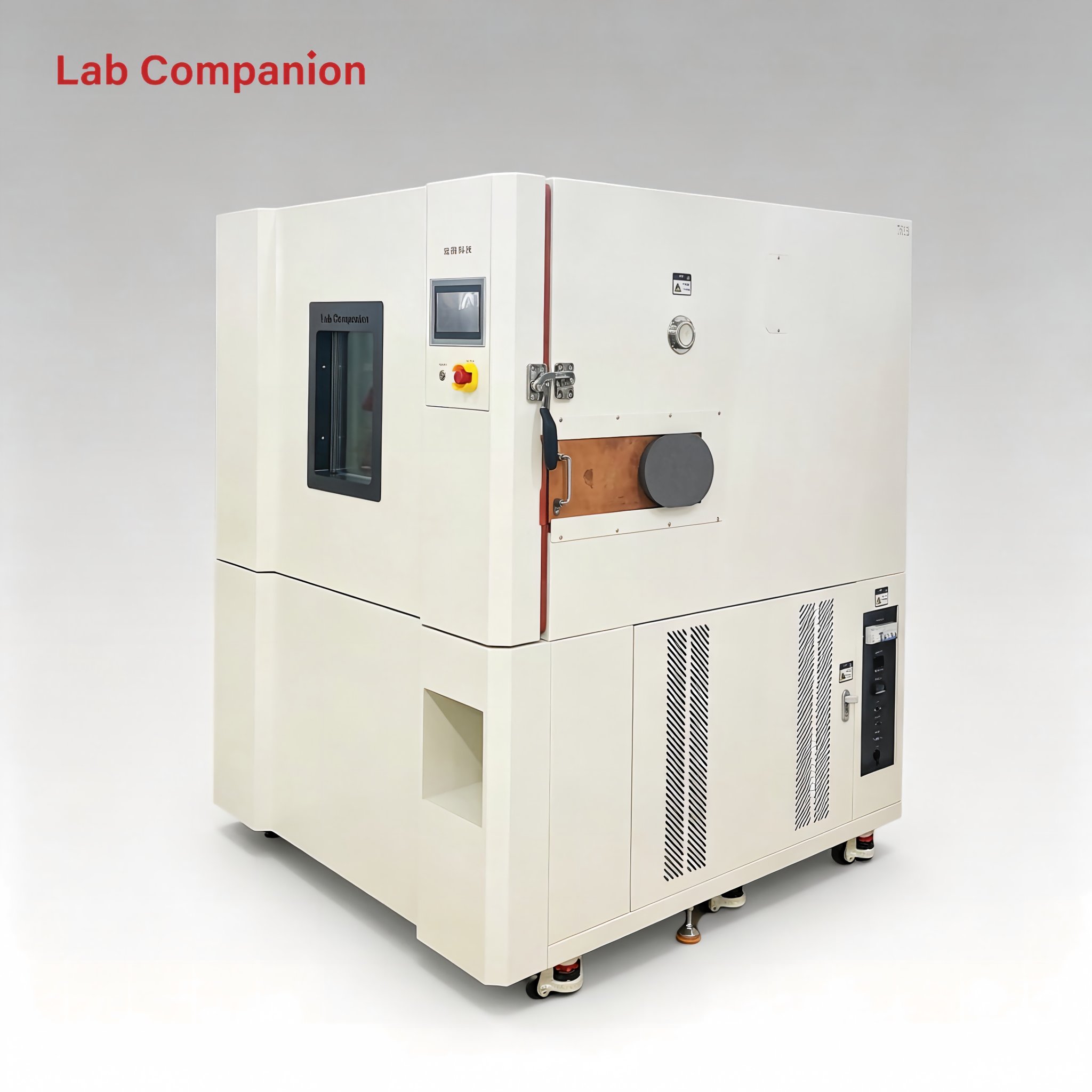
Камера для испытаний на температуру и влажность

Камера для испытаний на температуру и влажность

  • Lab Companion Customization: Achievable Needs & "False Needs" for Non-Standard Fast Temperature Chambers Lab Companion Customization: Achievable Needs & "False Needs" for Non-Standard Fast Temperature Chambers
    Mar 02, 2026
        With the rapid development of electronics, new energy, aerospace and other industries, conventional standard fast temperature chambers can no longer meet the personalized testing needs of some enterprises, making non-standard customization an increasingly popular choice. However, many enterprises fall into the misunderstanding of "blind customization" when making customizations, believing that all needs can be customized or over-customizing, which leads to doubled customization costs, extended cycles, and even some customization needs that are meaningless and become "false needs".     With 21 years of experience in non-standard customization and thousands of customized cases completed, Lab Companion combines practical experience to clarify the core customizable dimensions of fast temperature chambers, analyze common "false needs", help enterprises accurately sort out customization needs, avoid over-customization, and achieve "customized adaptation and controllable costs". I. Core Customizable Dimensions of Fast Temperature Chambers (Achievable)     Combined with industry needs and technical feasibility, the customizable dimensions of fast temperature chambers are mainly divided into 4 categories, all of which can be accurately implemented: 1. Temperature Range Customization: The temperature range of conventional equipment is -70℃~+180℃. According to enterprise needs, we can customize a lower temperature (minimum -100℃) or a higher temperature (maximum +250℃) to adapt to harsh testing scenarios such as aerospace and military industry. For example, Lab Companion customized a fast temperature chamber for a military enterprise with a temperature range of -78℃~+150℃, which meets the GJB 150.5A military standard. 2. Volume and Size Customization: The conventional volumes are 150L, 225L, 400L, 600L and 1000L. According to the size and batch of test products, we can customize small volumes (minimum 50L) or large volumes (maximum over 10000L) to adapt to the testing of products of different sizes such as small chips, large automotive battery packs and motors. For example, Lab Companion customized a large fast temperature chamber with a volume of 5000L for a new energy enterprise, which can test multiple automotive battery packs at the same time, greatly improving testing efficiency. 3. Temperature Change Rate Customization: The conventional temperature change rate is 5-20℃/min. According to testing standards, we can customize a higher temperature change rate (maximum 30℃/min) or more precise temperature change rate control to adapt to the dynamic temperature testing needs of special products. For example, the equipment customized by Lab Companion for a semiconductor enterprise can realize stepless control of temperature change rate from 1-20℃/min, accurately matching the needs of different stages of chip testing. 4. Special Function Customization: According to industry testing needs, we can customize special functions such as nitrogen replacement, probe station interface, high heat load adaptation, remote monitoring upgrade and automatic data analysis to adapt to personalized testing scenarios in semiconductor, AI, military and other industries. For example, for semiconductor chip testing, the nitrogen replacement function is customized to prevent chip oxidation; for AI server testing, the high heat load adaptation function is customized, with a heat load capacity of up to 60kW, ensuring stable testing. II. Common "False Customization Needs" (To Avoid)     The so-called "false needs" refer to needs that can be met through adjustment or simple modification of conventional equipment without customization. If such needs are blindly customized, they will increase customization costs and cycles, and have no practical significance. Common false needs are as follows: 1. Blind Upgrade of Temperature Change Rate: Many enterprises think that the higher the temperature change rate, the better, and blindly require customization of a high rate of 30℃/min, but their own testing standards only require 10℃/min. Customizing a high rate not only increases the cost by more than 30%, but also doubles the energy consumption in the later stage, which cannot play a role in actual use. 2. Excessive Volume Enlargement: Some enterprises blindly require customization of large-volume equipment for fear that the test products cannot be accommodated, but ignore their own test batch and laboratory space, resulting in excessive equipment volume, waste of energy consumption, excessive space occupation, and a significant increase in procurement costs. For example, if only small electronic components are tested, the conventional 225L equipment can meet the needs, and there is no need to customize large equipment above 600L. 3. Redundant Customization of Special Functions: Some enterprises blindly pursue "complete functions" and customize various special functions such as nitrogen replacement and probe station interface, but their own testing scenarios do not need them. For example, conventional electronic component testing does not require customization of nitrogen replacement function. Such redundant customization will increase the cost by 10%-20% and make later maintenance complicated. III. Lab Companion's Non-Standard Customization Advantages     In the non-standard customization service, Lab Companion will first sort out the testing needs for enterprises, distinguish between "necessary customization needs" and "false needs", and provide reasonable customization schemes combined with the enterprise's testing standards, product characteristics and budget, so as to avoid over-customization. At the same time, Lab Companion has a professional customized R&D team with a short customization cycle (20-30 days for conventional customization and 45-60 days for complex customization), and communicates with enterprises throughout the customization process to ensure that the customized equipment accurately adapts to the needs, while controlling the customization cost and cycle. IV. Core Principle of Non-Standard Customization     The core of non-standard customization is "adapting to needs and focusing on practicality", rather than blindly pursuing "completeness and high-end". When customizing fast temperature chambers, enterprises need to rationally put forward customization needs based on their own testing needs, avoid "false needs", and choose manufacturers with strong customization capabilities and rich experience, such as Lab Companion, to achieve "customized adaptation, controllable costs and improved efficiency", so that customized equipment can truly empower testing work.
    ЧИТАТЬ ДАЛЕЕ
  • Thermal Shock Test Chamber Selection Guide: Avoid 90% of Technical Pitfalls Thermal Shock Test Chamber Selection Guide: Avoid 90% of Technical Pitfalls
    Feb 28, 2026
    Thermal shock test chambers are critical equipment for R&D and laboratory testing, used primarily to simulate extreme rapid temperature change environments and verify product structural stability and performance reliability under severe thermal shock. Proper equipment selection directly determines test data accuracy, service life, and long-term operation and maintenance costs. In actual procurement, many companies and laboratories fall prey to manufacturers’ exaggerated parameters and overhyped concepts, resulting in incorrect selection decisions. This not only wastes procurement budgets but also delays testing schedules and product development efficiency. Guangdong Lab Companion has over 21 years of expertise in environmental reliability test equipment. Our TS2 (two-zone) and TS3 (three-zone) thermal shock test chambers are trusted by global customers for their robust technology and fully transparent specifications. Based on real product parameters and practical experience in international projects, we break down the 3 most common technical pitfalls and provide practical solutions to help you select the right equipment. Pitfall 1: Exaggerated Thermal Shock Speed – Trust Only Verifiable Real Parameters The most common trap is false claims about temperature shock speed, where actual transition time differs drastically from advertised values. Many manufacturers claim a “temperature transition time ≤5 seconds,” but real performance often exceeds 15 seconds, resulting in ineffective thermal shock and failure to replicate real-world extreme conditions. Do not rely solely on marketing claims; verify structural design and testable parameters. All Lab Companion specifications are third-party testable and fully traceable: • TS2 Two-Zone Model: High-precision pneumatic basket design ensures stable sample movement, with actual temperature transition time ≤10 seconds, matching rated performance. • TS3 Three-Zone Model: Equipped with patented air damper assembly (Patent No. CN 217084555 U), featuring excellent airtightness to eliminate cross-interference between zones. Transition efficiency is 30% higher than traditional models. Both series feature a temperature range of -65℃ ~ +150℃ with no parameter exaggeration, enabling accurate reproduction of extreme thermal shock environments. Pitfall 2: Unqualified Temperature Recovery Time – Severe Impact on Testing Efficiency The second major issue: excessively long temperature recovery time, which drastically reduces testing productivity. A core requirement of thermal shock testing is rapid temperature transition and stable temperature control. Long recovery times directly extend test cycles. Many manufacturers claim “recovery time ≤5 minutes,” while actual performance often takes 8–10 minutes with large temperature fluctuations. Lab Companion optimizes refrigeration and heating systems to solve this pain point: • Cascade refrigeration system with premium imported compressors and environmentally friendly refrigerant • Stainless steel heaters and PID precise temperature control for dynamic energy compensation • After switching samples from -55℃ to 125℃, temperature recovery time stably ≤5 minutes • Temperature fluctuation ≤±0.5℃, temperature uniformity ≤±2℃ Fully compliant with GB 10592-2008, IEC 60068-2-14 and other international standards, ensuring high testing efficiency and reliable data. Pitfall 3: Poor Test Space Design – Low Compatibility and Potential Safety Risks The third easily overlooked pitfall: inadequate interior chamber design, leading to poor compatibility and safety hazards. To cut costs, some manufacturers use low load capacity and inferior interior materials, which fail to fit various sample sizes and may deform under repeated thermal cycling, shortening equipment life. Lab Companion TS2 / TS3 series are engineered for international customer applications: • Sample load capacity ranges from 2.5 kg to 15 kg, suitable for small electronic components, medium-sized parts, and more • Interior chamber: SUS304 stainless steel; exterior: powder-coated cold-rolled steel with heavy-duty insulation layer for energy efficiency and deformation resistance • Comprehensive safety protection: over-temperature protection, leakage protection, compressor overload protection, etc. • Explosion-proof modules available for hazardous samples, eliminating safety risks Extra Tips: 2 Commonly Overlooked Selection Mistakes 1. Focusing only on component brands, ignoring system integration capability Imported parts do not guarantee high performance. System matching and control algorithms are critical. Lab Companion uses premium imported compressors, Siemens PLC and 7-inch color touchscreen, combined with optimized air duct and control logic, achieving over 20% lower energy consumption than comparable industry models. 2. Blindly pursuing extreme low temperatures, ignoring actual testing requirements Over-specification increases unnecessary procurement and operating costs. Lab Companion supports full customization: temperature range, chamber size, load capacity, interfaces and more can be tailored to avoid waste. Core Selection Principles: 3 Rules for Accurate, Risk-Free Purchase For international customers, focus on three key factors: 1. Genuine, verifiable parameters (no exaggeration) 2. Compatibility with your samples and testing scenarios 3. Manufacturer’s technical strength and global service capability With 21 years of manufacturing experience, Guangdong Lab Companion provides real, testable specifications for all products. TS2 and TS3 thermal shock test chambers cover two-zone and three-zone configurations, meeting major international testing standards. Supported by a global service network for fast response and local support, we help you obtain stable, reliable and cost-effective test equipment to support your product R&D and quality control.
    ЧИТАТЬ ДАЛЕЕ
  • LabCompanion® Rapid Temperature Change Chamber vs. Thermal Shock Chamber: Principle Differences & Application Guidelines LabCompanion® Rapid Temperature Change Chamber vs. Thermal Shock Chamber: Principle Differences & Application Guidelines
    Feb 27, 2026
    In environmental simulation testing, Rapid Temperature Change Chambers and Thermal Shock Chambers are both critical for verifying product reliability under temperature stress. However, many customers choose the wrong equipment due to unclear working principles and application scenarios: • Simulating natural gradual temperature changes with a thermal shock chamber → test results do not reflect real working conditions. • Testing resistance to instantaneous temperature shock with a rapid temperature change chamber → fails to meet test requirements. Wrong selection wastes investment, delays R&D, and weakens market competitiveness. Based on more than 20 years of industry experience, LabCompanion® explains the core differences between these two chambers to help you select the right equipment for your application. I. Core Principle Differences 1. Rapid Temperature Change Chamber Single-chamber design · Continuous & gradual temperature change • The entire test is performed in one single test space. • Heating and cooling systems work together to provide smooth, continuous, adjustable temperature ramping. • Temperature change rate: 5–20°C/min (higher rates available upon request). • LabCompanion® advantage: Binary cascade refrigeration, high-efficiency heating, and dual PID + AI intelligent control for stable, precise ramping without sudden fluctuations. • Simulates real-world natural temperature cycles. 2. Thermal Shock Chamber Multi-chamber design · Instant temperature switching • Typically 3 independent zones (hot chamber, cold chamber, test area); 2-zone models also available. • Test samples are rapidly transferred between hot and cold environments with no gradual ramping. • Temperature shock speed: > 5°C/s (up to 10°C/s for high-performance models). • LabCompanion® advantage: Independent heating & cooling systems, fast-acting valves, and airflow guidance for extreme temperature shock. • Temperature range:         ○ Hot zone: +60°C to +200°C ○ Cold zone: -70°C to 0°C (down to -196°C with liquid nitrogen) II. Key Parameters & Temperature Characteristics Rapid Temperature Change Chamber • Focus parameters: Ramp rate, temperature accuracy ±0.1–±0.5°C, uniformity ≤ ±2°C • Standard range: -70°C to 180°C (customizable to -220°C) • Temperature behavior: Continuous, smooth, gradual • Strength: High precision, uniform temperature field Thermal Shock Chamber • Focus parameters: Shock temperature range-196°C to +200°C, shock speed, recovery time • Temperature behavior: Instant, extreme, non‑gradual change • Strength: Ultra-fast shock, high stability for harsh testing III. Application & Selection Guide Choose Rapid Temperature Change Chamber if: • You need to simulate natural daily/seasonal temperature cycles. • You want to evaluate long-term reliability under repeated gradual temperature changes. • Industries:         ○ Automotive electronics & components ○ Consumer electronics ○ Semiconductors & PCBs ○ General electronic reliability testing Choose Thermal Shock Chamber if: • You need to simulate extreme, instantaneous temperature swings. • You want to expose material weaknesses, cracks, or failures quickly. • Industries: ○ Aerospace ○ Military & defense ○ High-performance alloys ○ Semiconductor packaging ○ Components used in extreme environments IV. LabCompanion® Solutions & Services 1. Dual-Mode Customization For customers needing both temperature cycling AND thermal shock, LabCompanion® provides customized dual-mode systems that support:      Single-chamber rapid temperature changeDual-chamber thermal shock      in one integrated unit, reducing cost and space.     2. Compliance & Quality All LabCompanion® chambers meet international and national standards, providing reliable alternatives to imported equipment at a competitive cost. 3. Global Service Support • Professional one-on-one application & selection support • Comprehensive after-sales guidance service (2-hour response) to assist with installation, calibration, maintenance, and training remotely • Full lifecycle support: professional guidance for installation, calibration, maintenance, and technical training V. Summary – How to Choose • Simulate real natural temperature changes → Rapid Temperature Change Chamber • Test resistance to extreme instant temperature shock → Thermal Shock Chamber LabCompanion® provides professional, reliable environmental test solutions to support your product R&D and quality assurance.
    ЧИТАТЬ ДАЛЕЕ
  • Core Criteria for Selecting the Top 10 High and Low Temperature Test Chambers and How to Evaluate Manufacturer Cost-Effectiveness Core Criteria for Selecting the Top 10 High and Low Temperature Test Chambers and How to Evaluate Manufacturer Cost-Effectiveness
    Feb 26, 2026
        When the industry discusses the ranking of high and low temperature test chambers and selects the top 10, the core criteria are never a simple accumulation of equipment parameters, but whether the equipment can be deeply integrated into the rigorous R&D and quality inspection system, serving as a solid cornerstone for supporting product reliability engineering. The LabCompanion®  high and low temperature test chamber series, with its positioning as a "trustworthy testing partner", has not only maintained a leading position in various rankings of high and low temperature test chambers through long-term market practice, but also silently verified the extreme performance of products in core projects in many key fields such as chips, automobiles, and semiconductors, becoming an industry benchmark. I. Four Core Criteria for Selecting the Top 10 High and Low Temperature Test Chambers Aspect 1: Precise Temperature Control and Quality Stabilization, Upgrading from "Data Provider" to "Risk Mitigator"     The accuracy of test data is the core competitiveness of high and low temperature test chambers, and even the primary prerequisite for being selected into the top 10 rankings. With excellent temperature fluctuation control and uniformity, LabCompanion®  high and low temperature test chambers can effectively avoid environmental noise interference, accurately capture tiny performance attenuation of products, expose potential defects in advance, and fundamentally reduce R&D and mass production risks. For example, in the testing of new energy vehicle battery modules, tiny temperature gradient differences may directly affect the accuracy of evaluating the thermal management performance of battery packs, thereby laying a huge hidden danger of mass production recalls. The high-precision temperature control capability of LabCompanion®  equipment ensures the uniqueness and reliability of test conclusions, minimizing test errors, which is also the core technical strength for it to maintain a leading position in the high-end high and low temperature test chamber industry ranking. Aspect 2: Ensuring Test Continuity to Empower R&D Efficiency Upgrade     Interruptions in R&D and quality inspection processes often mean huge time and cost losses. Therefore, the stability of equipment is the key soft power for selecting the top 10 high and low temperature test chambers. LabCompanion®  accurately addresses this pain point of customers, focusing on enhancing reliability in equipment design, adopting core components of well-known brands and system architectures verified by long-term market practice, and striving for extremely low failure rates and long mean time between failures. At the same time, the equipment integrates a number of humanized designs - the anti-condensation large viewing window facilitates real-time observation of test status, the adjustable controller adapts to different operating habits, and the convenient data export interface avoids data loss, comprehensively reducing the risk of manual operation interruptions. For industries such as semiconductors and optical devices that need to carry out long-term temperature cycle and high-low temperature dwell tests, the long-term stable operation of the equipment is not only a guarantee of the project cycle, but also a core support for the R&D rhythm. This intangible value is far beyond the price of the equipment itself, becoming an important weight for it to be selected into the top 10 rankings. Aspect 3: Balancing Compliance and Flexibility to Meet the Challenges of Global Supply Chains     With the intensification of the global layout of the manufacturing industry, products need to meet the requirements of multiple standards in multiple countries and fields. Therefore, the standard compliance and scenario adaptability of equipment have become important indicators for selecting the top 10 high and low temperature test chambers. The LabCompanion®  high and low temperature test chamber has built-in compliance design, which can directly meet a number of rigorous requirements such as national standards (GB/T 2423.1), military standards (GJB 150.3A), and International Electrotechnical Commission standards (IEC), providing customers with a "one-stop" compliant testing platform that can meet global quality inspection needs without additional adaptation. At the same time, the equipment covers a variety of standard models from 100L to 1500L, and supports in-depth non-standard customization, which can flexibly adapt to the full-scenario needs of incoming inspection (IQC), R&D pilot test, and finished product factory inspection (OQC) of enterprises of different sizes, serving as a standardized interface connecting the quality discourse power of the global supply chain and demonstrating its comprehensive adaptability. Aspect 4: Full-Life-Cycle Services to Forge Long-Term Cooperation Value     The value of a truly high-end equipment is never limited to the moment of delivery. Perfect full-life-cycle services are the core bonus item for selecting the top 10 high and low temperature test chambers. LabCompanion®  has always adhered to the concept that "delivery is the starting point of service", providing customers with not only a piece of equipment, but also a full-process solution covering pre-sales technical consultation, in-sales installation and commissioning, after-sales maintenance support, and regular calibration services. This service concept oriented to customers' long-term success has enabled the brand to maintain a high customer retention rate and recommendation rate after being tested by the market cycle. Compared with short-term marketing hype, this accumulated brand credibility is the core strength for it to maintain a leading position in various professional rankings of high and low temperature test chambers and be selected into the top 10 list. II. Core Evaluation Dimensions for Cost-Effectiveness of High and Low Temperature Test Chamber Manufacturers     Evaluating the cost-effectiveness of high and low temperature test chamber manufacturers is never "low price first", but "value matching" - that is, the comprehensive balance between equipment performance, service quality and price. It can be judged from three core points: first, the matching degree between core performance and demand. Prioritize equipment whose temperature control accuracy, stability and compliance meet the needs of your own industry to avoid waste caused by blindly pursuing high-end parameters; second, the later operation and maintenance cost of the equipment, including the service life of core components, the cost of consumable replacement, and the efficiency of fault maintenance.     LabCompanion®  can significantly reduce long-term operation and maintenance costs by virtue of  high-quality core components and perfect after-sales service; third, service added value. Professional technical consultation, rapid after-sales response, and regular calibration services can effectively improve equipment utilization and reduce downtime losses, which is also an important embodiment of high cost-effectiveness. Conclusion     In the view of LabCompanion® , a high and low temperature test chamber is never a simple collection of hardware, but a key system that carries customers' quality commitments and supports products to enter the market. It stands quietly in the laboratory, but deeply participates in every link of product reliability improvement, becoming a behind-the-scenes contributor to the quality upgrade of Made in China. In the future, LabCompanion®  will continue to deepen its positioning as the "cornerstone of reliability testing", consolidate and enhance its core position in the global reliability testing field through more intelligent and interconnected technological iterations, and help Made in China win world trust with excellent quality. About LabCompanion®     LabCompanion®  is a leading provider of environmental reliability test equipment and solutions, always taking "helping customers improve the intrinsic quality of products" as its mission. With high-precision, high-reliability test equipment and professional and comprehensive full-life-cycle services, Hongzhan Technology has become a trustworthy long-term partner for many advanced manufacturing enterprises and scientific research institutions in China and even the world on the road of quality and reliability improvement.
    ЧИТАТЬ ДАЛЕЕ
  • Core Features of Multi-Layer High and Low Temperature Humidity Test Chamber Core Features of Multi-Layer High and Low Temperature Humidity Test Chamber
    Jan 20, 2026
    In the reliability testing of new energy, electronic and electrical, aerospace and other fields, the multi-layer high and low temperature humidity test chamber breaks through the limitations of traditional single-chamber equipment by virtue of structural and technological innovations, becoming a core equipment for efficient and accurate environmental simulation testing. Its core features are as follows: 1. Layered Independent Structure to Block Working Condition Interference • Adopts a vertical layered core structure with 3-5 built-in independent sealed chambers, made of 316L stainless steel for high/low temperature corrosion resistance and deformation resistance. • High-density thermal insulation materials (thermal conductivity ≤0.023W/(m·K)) are installed between layers, combined with double-channel silicone rubber seals and door gap heating defrost strips to form a strong "thermal barrier". • Practical tests confirm simultaneous operation of 80℃/95%RH (top layer) and -30℃/30%RH (bottom layer), with inter-chamber interference ≤1%, ensuring the independence and accuracy of multi-variable tests. 2. Parallel Testing Mode to Maximize Efficiency • Breaks the time-consuming bottleneck of traditional "serial testing" and realizes "spatial parallel testing" upgrade. • A four-layer equipment can simulate four different temperature and humidity conditions simultaneously; 16 sample groups complete 4-day test volume of ordinary equipment in 8 hours, improving efficiency by 12 times. • Each chamber is equipped with independent compressors, humidifiers and air duct systems, supporting parallel operation of composite working conditions (constant temperature, alternating, low temperature, etc.), shortening R&D cycles by 30% (verified by new energy enterprises). 3. Dual-Algorithm Precision Control with Excellent Data Stability • Adopts coordinated control of "PID + fuzzy control" dual algorithms, combined with high-precision capacitive sensors and temperature compensation technology. • Temperature fluctuation is stabilized at ±0.5℃, humidity deviation ≤±3%RH (up to ±2%RH for some models); multi-directional guide fans and flow equalizing plates eliminate in-chamber temperature gradient, ensuring uniform environmental impact on samples. • Fuzzy control adjusts refrigeration power quickly for sudden load changes, restoring stable conditions within 3-5 minutes and avoiding test interruption caused by temperature/humidity overshoot. 4. Intensive Energy-Saving Design to Reduce Comprehensive Costs • Optimized design of "shared main unit + layered frequency conversion" reduces floor area of a three-layer equipment to 35% of three single-chamber equipment; centralized power supply cuts line cost by 40%. • Frequency conversion module dynamically adjusts power based on chamber load, with total energy consumption 40% lower than same-capacity ordinary equipment and single-unit power ≤5kW. • Reduces per-batch test cost by over 30% for enterprises, balancing space utilization, energy conservation and operation economy. 5. Intelligent Data Management to Meet Standardized Requirements • Supports independent storage and on-screen display of layered data, generates "temperature-humidity-layer number" 3D curves, and automatically exports CNAS-certified reports to meet ISO, GB/T and other traceability standards. • High-end models are equipped with IoT modules for remote monitoring, fault early warning and connection with R&D management systems, reducing material thermal aging rate analysis error from ±8% to ±1.5% and realizing full-process digital test control. In summary, with the core advantages of "multi-chamber independence, efficient parallelism, precise control and energy-saving intensification", the equipment reconstructs environmental testing logic, provides technical support for product reliability verification, and becomes a key tool for R&D and quality control in high-end manufacturing.
    ЧИТАТЬ ДАЛЕЕ
  • Rapid Temperature Change vs. Standard Chambers: Selection Guide & Cost Comparison Rapid Temperature Change vs. Standard Chambers: Selection Guide & Cost Comparison
    Jan 07, 2026
    High-low temperature test chambers are essential equipment in product reliability testing. However, many procurement managers struggle when choosing between standard models and rapid temperature change (RTC) models: What are the key differences? How much is the price gap? Which is more cost-effective for long-term use? This guide clarifies the core differences in performance, applications, and costs to help you make the right choice. I. Core Performance Differences: Beyond "Faster Heating/Cooling" The gap between the two is far more than just temperature rate—extending to structural design and testing capabilities. Comparison Dimension Standard High-Low Temperature Chamber Rapid Temperature Change Chamber Temperature Rate 0.7-1℃/min (standard), meeting basic testing needs 3-20℃/min (customizable), some models support linear heating/cooling Structural Design Single compressor + standard air duct, simple structure Dual-compressor cascade system + high-efficiency heat exchange module + impact-resistant structure, suitable for high-frequency temperature changes Temperature Control Precision Fluctuation ±0.5℃, uniformity ±2℃ Fluctuation ±0.3℃, uniformity ±1.5℃, no overshoot during temperature changes Core Testing Capability Complies with GB/T 2423 standard; suitable for steady-state high-low temperature storage and temperature resistance testing Simulates extreme rapid temperature change environments; supports accelerated aging testing, significantly shortening verification cycles     Standard chambers suffice for consumer electronics, small home appliances, etc. For new energy batteries, automotive components, aerospace, RTC chambers are a must—they accurately simulate severe temperature changes during transportation/use to expose product defects in advance. Example: An automotive parts enterprise reduced testing cycles from 3 months (standard chamber) to 1 month (RTC chamber), advancing product launch by 2 months. II. Cost Differences: Procurement, Operation & Maintenance RTC chambers are more expensive, but the specific cost gap and long-term expenses are detailed below: 1. Procurement Cost: 2-5x Higher, Driven by High-Quality Components For the same volume, RTC chambers cost 2-5x more than standard models. The gap stems from high-precision dual compressors, custom heating/cooling modules, and fatigue-resistant structural parts—all with higher R&D and production thresholds. 2. Operating Cost: Higher Power & Consumables RTC chambers consume 1.5-3x more power: A 100L standard chamber uses 5-8kW, while an RTC model uses 8-20kW. Electricity costs increase with usage frequency. RTC chambers also require special high-temperature heat transfer oil and eco-friendly refrigerants, with consumable costs twice that of standard models (which mainly use low-cost filters and sensor calibration). 3. Maintenance Cost: Complex Structure = Higher Requirements Standard chambers have simple structures and few wearing parts, with low annual maintenance costs (filter replacement, sensor calibration). RTC chambers require more frequent maintenance due to multiple core components and high precision; annual maintenance costs are 1.8-3x higher (e.g., dual compressor and precision control system overhauls). III. Selection Guide: Choose Based on Needs ✅ Choose Standard Chamber If: 1. You’re in consumer electronics, home appliances, toys, etc., and only need to meet GB/T 2423 standard 2. Budget is limited, pursuing cost-effectiveness, and testing frequency is low 1. Testing goals: Basic high-low temperature storage and temperature resistance verification ✅ Choose RTC Chamber If: 2. You’re in new energy, automotive, aerospace, needing to simulate extreme temperature changes • You want to shorten testing cycles and accelerate product launches • High testing requirements: Precise temperature rate control and no overshoot IV. Lab Companion: Customized Cost-Effective Solutions     As a professional test equipment manufacturer, Guangdong Hongzhan Technology offers cost-effective standard high-low temperature chambers and customizable RTC chambers (3-20℃/min) for new energy, automotive, and other industries with strict requirements.   Lab Companion provide not only equipment but also one-stop customized solutions based on your testing needs and budget—helping you clarify costs and select the right chamber for efficient, worry-free product reliability testing.   Contact us anytime for accurate quotes and customized selection plans tailored to your industry and needs!
    ЧИТАТЬ ДАЛЕЕ
  • Core 6 Factors for Rapid Temperature Change Chamber Selection Core 6 Factors for Rapid Temperature Change Chamber Selection
    Jan 06, 2026
    Core Logic: Match testing requirements, balance performance and full life-cycle cost, and avoid over-specification for under-utilization. I. Core Testing Requirements 1. Temperature Change Rate Clarify the loaded rate and deviation requirements (e.g., ≤±0.5℃/min), and match the application scenarios: l 5–10℃/min for consumer electronics l 10–20℃/min for automotive/aerospace industries 2. Temperature & Humidity Range Cover the specified testing standards: l -40~85℃ for new energy products l -55~125℃ for aerospace products Select models with 20%–98%RH range if humidity testing is required. 3. Sample Compatibility l The chamber volume should be ≥ 3 times the sample volume. l Dynamic load compensation is required for high-heat-capacity samples (e.g., metal components). II. Hardware Performance 1. Refrigeration System Prioritize dual-compressor cascade systems equipped with imported brands (Danfoss/Copeland) and eco-friendly refrigerants (R404A/R23). 2. Air Duct & Heating System Adopt scroll diversion + baffle design, with 0–100% linear adjustment of heating tubes. 3. Sensors Use imported PT1000 sensors with a sampling frequency of ≥ 10 times/second. III. Software Functions 1. Algorithm PID closed-loop control + adaptive temperature zone compensation, supporting custom rate curve setting. 2. Data Management Automatic data recording and export (Excel/CSV format), with support for remote control and multi-channel alarm. 3. Safety Features Over-temperature protection, compressor overload protection, water shortage protection, etc. Explosion-proof pressure relief devices are mandatory for flammable and explosive samples. IV. Full Life-Cycle Cost 1. Procurement Cost Select models based on actual needs; avoid blind pursuit of high rates (the price of 10℃/min models is 1.5–2 times that of 5℃/min models). 2. Operation Cost Prefer inverter compressors to reduce electricity consumption by 15%–20%. 3. Maintenance Cost Choose models with modular structure, and confirm annual free calibration services. V. Expandability & Compatibility Support post-purchase installation of humidity, explosion-proof, and data acquisition modules. Compatible with upper computers and testing fixtures for automated testing. VI. Manufacturer Services & Qualifications Provide customized solutions and loaded rate test reports. Ensure the equipment has passed ISO 9001 and CE certifications, complying with the GB/T 2423.22 standard. Ø Selection Case Testing Scenario: Automotive motor controller testing (8kg, AEC-Q100 standard) Recommended Model: 150L chamber with 10℃/min loaded rate, -40~125℃ temperature range, and explosion-proof function. Benefits: Balances testing requirements and cost, improving testing efficiency by 4 times.
    ЧИТАТЬ ДАЛЕЕ
  • Equipment Selection Guide: Ovens vs. Temperature Test Chambers Equipment Selection Guide: Ovens vs. Temperature Test Chambers
    Jan 04, 2026
        Equipment selection directly impacts efficiency, quality and data reliability. Standard ovens, precision ovens and temperature-humidity test chambers have distinct functional boundaries and application scenarios. Many enterprises suffer cost waste or functional insufficiency due to improper selection. This guide clarifies selection logic, breaks down matching schemes, avoids common pitfalls and provides precise guidance based on practical scenarios. 1. Core Selection Logic Adhere to the four-step framework of defining demand types → verifying temperature accuracy → supplementing environmental requirements → matching budget to clarify equipment selection boundaries. Step 1: Define Demand Types Choose oven series for process applications (drying, curing, etc.). Choose temperature-humidity test chambers for environmental reliability verification (extreme temperature variation, humidity exposure). Note: Ovens lack cooling function and cannot replace test chambers. Step 2: Verify Temperature Control Accuracy Standard ovens: Suitable for applications allowing ±5℃ temperature deviation. Precision ovens: Required for high-precision scenarios (±1℃ tolerance, e.g., electronic packaging, medical sterile drying). Temperature-humidity test chambers: Ideal for extreme environment testing, with accuracy up to ±1℃ (even ±0.5℃ for premium models). Step 3: Supplement Environmental Requirements Ovens: Applicable for ambient temperature heating only. Temperature-humidity test chambers (including humidity-controlled models): Necessary for low-temperature (-20℃ ~ -70℃), cyclic temperature variation or humidity control (e.g., 85℃/85%RH) applications. Note: Precision ovens do not support cooling or humidity control functions. Step 4: Match Budget Standard ovens (thousands of CNY): For basic drying tasks with limited budget. Precision ovens (10,000 ~ 100,000 CNY): For processes requiring high precision and stability. Temperature-humidity test chambers (100,000 ~ hundreds of thousands of CNY): For professional environmental testing; reserve budget for operation and maintenance. 2. Typical Application Scenarios: Demand-Equipment Matching This section breaks down matching schemes for three key sectors (electronics, automotive, medical & research) to provide intuitive references. Electronics Industry Simple component drying (±5℃ tolerance): Standard oven PCB solder paste curing (±0.5℃ accuracy, ±1℃ uniformity, multi-stage temperature control): Precision oven Chip cyclic testing (-40℃ ~ 125℃, data traceability required): Temperature-humidity test chamber Automotive Industry Basic part drying (±5℃ tolerance): Standard oven Sensor 24-hour aging test at 85℃ (±0.3℃ accuracy): Precision oven Battery pack rapid temperature cycling test (-40℃ ~ 85℃): Rapid temperature change test chamber Medical & Research Industry Routine consumable drying (±5℃ tolerance): Standard oven Syringe & catheter sterile drying (±0.5℃ accuracy, clean inner chamber, data traceability): Precision oven with 316 stainless steel enclosure Plastic material thermal stability study (-30℃ ~ 150℃): Temperature-humidity test chamber 3. Common Selection Pitfalls: Risk Avoidance Misconceptions often lead to wrong selections. Focus on avoiding these three key pitfalls: Pitfall 1: Using standard ovens instead of precision ovens Short-term cost reduction may cause higher product rejection rates and increased long-term costs. Solution: Always choose precision ovens for applications requiring ±1℃ accuracy; improved yield will offset the incremental cost. Pitfall 2: Using precision ovens for temperature cycling tests Ovens lack cooling capability, leading to test failure. Solution: Directly select temperature-humidity test chambers for low-temperature or cyclic temperature variation tests. Pitfall 3: Blindly pursuing high-spec test chambers Results in cost waste and underutilization of functions. Solution: Select equipment strictly based on actual test parameters to balance demand and budget. Conclusion The core of equipment selection lies in precise demand matching. Clarifying demand types and core parameters, combining scenario requirements with budget planning, and avoiding common pitfalls will maximize equipment value, support production quality improvement and boost R&D efficiency.
    ЧИТАТЬ ДАЛЕЕ
  • Краткое обсуждение использования и обслуживания камеры для испытаний на воздействие окружающей среды
    May 10, 2025
    Ⅰ. Правильное использование LABCOMPANIONИнструментОборудование для испытаний на воздействие окружающей среды остается типом точного и ценного инструмента. Правильная эксплуатация и использование не только предоставляют точные данные для персонала, проводящего испытания, но и обеспечивают долгосрочную нормальную работу и продлевают срок службы оборудования. Во-первых, перед проведением испытаний на воздействие окружающей среды необходимо ознакомиться с эксплуатационными характеристиками тестовых образцов, условиями испытаний, процедурами и методами. Полное понимание технических характеристик и структуры испытательного оборудования, в частности, работы и функциональности контроллера, имеет решающее значение. Внимательное прочтение руководства по эксплуатации оборудования может предотвратить неисправности, вызванные эксплуатационными ошибками, которые могут привести к повреждению образца или неточным данным испытаний. Во-вторых, выберите подходящее испытательное оборудование. Чтобы обеспечить плавное выполнение теста, следует выбрать подходящее оборудование на основе характеристик тестовых образцов. Следует поддерживать разумное соотношение между объемом образца и эффективной емкостью испытательной камеры. Для теплорассеивающих образцов объем не должен превышать одной десятой эффективной емкости камеры. Для ненагревающихся образцов объем не должен превышать одной пятой. Например, 21-дюймовый цветной телевизор, проходящий испытание на температурное хранение, может хорошо поместиться в камере объемом 1 кубический метр, но при включении телевизора из-за выделения тепла требуется камера большего размера. В-третьих, правильно расположите тестовые образцы. Образцы следует размещать на расстоянии не менее 10 см от стенок камеры. Несколько образцов следует размещать на одной плоскости, насколько это возможно. Размещение не должно препятствовать выходу или входу воздуха, а вокруг датчиков температуры и влажности должно быть достаточно места для обеспечения точных показаний. В-четвертых, для испытаний, требующих дополнительных сред, правильный тип должен быть добавлен в соответствии со спецификациями. Например, вода, используемая в камеры для испытаний на влажность должны соответствовать определенным требованиям: удельное сопротивление не должно быть менее 500 Ом·м. Водопроводная вода обычно имеет удельное сопротивление 10–100 Ом·м, дистиллированная вода 100–10 000 Ом·м, а деионизированная вода 10 000–100 000 Ом·м. Поэтому для испытаний на влажность необходимо использовать дистиллированную или деионизированную воду, и она должна быть свежей, так как вода, подвергающаяся воздействию воздуха, поглощает углекислый газ и пыль, со временем снижая свое удельное сопротивление. Очищенная вода, доступная на рынке, является экономически эффективной и удобной альтернативой. Пятое, правильное использование камер для испытаний на влажность. Влажная марля или бумага, используемые в камерах влажности, должны соответствовать определенным стандартам — не любая марля может заменить их. Поскольку показания относительной влажности выводятся из разницы температур сухого и влажного термометров (строго говоря, также под влиянием атмосферного давления и потока воздуха), температура влажного термометра зависит от скорости поглощения и испарения воды, на которые напрямую влияет качество марли. Метеорологические стандарты требуют, чтобы влажная марля была специализированной «влажной марлей» из льна. Неправильная марля может привести к неточному контролю влажности. Кроме того, марля должна быть установлена ​​правильно: длиной 100 мм, плотно обернутой вокруг датчика, с датчиком, расположенным на 25–30 мм над чашкой с водой, и марлей, погруженной в воду, чтобы обеспечить точный контроль влажности. Ⅱ. Техническое обслуживание оборудования для испытаний на воздействие окружающей средыОборудование для испытаний на воздействие окружающей среды бывает разных типов, но наиболее часто используются высокотемпературные, низкотемпературные и влажностные камеры. В последнее время стали популярны комбинированные испытательные камеры температуры и влажности, объединяющие эти функции. Их сложнее ремонтировать, и они служат репрезентативными примерами. Ниже мы обсудим структуру, распространенные неисправности и методы устранения неисправностей для испытательных камер температуры и влажности. (1) Конструкция обычных испытательных камер для измерения температуры и влажностиПомимо правильной эксплуатации, испытательный персонал должен понимать структуру оборудования. Испытательная камера температуры и влажности состоит из корпуса камеры, системы циркуляции воздуха, системы охлаждения, системы отопления и системы контроля влажности. Система циркуляции воздуха обычно имеет регулируемое направление воздушного потока. Система увлажнения может использовать методы испарения на основе котла или поверхностного испарения. Система охлаждения и осушения использует холодильный цикл кондиционирования воздуха. Система отопления может использовать электрические нагреватели с ребрами или прямой нагрев проволочным сопротивлением. Методы измерения температуры и влажности включают тестирование по сухому-влажному термометру или прямые датчики влажности. Интерфейсы управления и отображения могут включать отдельные или комбинированные контроллеры температуры и влажности. (2) Распространенные неисправности и методы их устранения Камеры для испытаний на температуру и влажность1.Проблемы высокотемпературных испытаний Если температура не достигает заданного значения, проверьте электрическую систему на предмет неисправностей.Если температура повышается слишком медленно, проверьте систему циркуляции воздуха, убедившись, что заслонка правильно отрегулирована и двигатель вентилятора работает.Если происходит превышение температуры, перекалибруйте настройки ПИД.Если температура резко повышается, возможно, неисправен контроллер и его необходимо заменить. 2.Проблемы с испытаниями при низких температурах Если температура падает слишком медленно или восстанавливается после достижения определенной точки: Перед испытанием убедитесь, что камера предварительно высушена. Убедитесь, что образцы не переполнены и не препятствуют циркуляции воздуха. Если эти факторы исключены, то холодильной системе может потребоваться профессиональное обслуживание.Температурный скачок часто происходит из-за плохих условий окружающей среды (например, недостаточного зазора за камерой или высокой температуры окружающей среды). 3.Проблемы с испытанием на влажность Если влажность достигает 100% или значительно отклоняется от целевого значения: Для 100% влажности: Проверьте, сухая ли марля влажного термометра. Проверьте уровень воды в резервуаре датчика влажного термометра и в системе автоматической подачи воды. При необходимости замените или очистите затвердевшую марлю. Для низкой влажности: Проверьте подачу воды в систему увлажнения и уровень бойлера. Если они в норме, возможно, требуется профессиональный ремонт электрической системы управления. 4. Аварийные неисправности во время эксплуатации Если оборудование неисправно, на панели управления отобразится код ошибки со звуковым сигналом. Операторы могут обратиться к разделу по устранению неполадок в руководстве, чтобы определить проблему и организовать профессиональный ремонт для скорейшего возобновления тестирования. Другое оборудование для испытаний на воздействие окружающей среды может демонстрировать различные проблемы, которые следует анализировать и решать в каждом конкретном случае. Регулярное техническое обслуживание имеет важное значение, включая очистку конденсатора, смазку движущихся частей и проверку электрических элементов управления. Эти меры необходимы для обеспечения долговечности и надежности оборудования.
    ЧИТАТЬ ДАЛЕЕ

оставить сообщение

оставить сообщение
Если вы заинтересованы в нашей продукции и хотите узнать более подробную информацию, пожалуйста, оставьте сообщение здесь, мы ответим вам, как только сможем.
представлять на рассмотрение

Дом

Продукты

WhatsApp

связаться с нами